Page Not Found
Page not found. Your pixels are in another canvas.
A list of all the posts and pages found on the site. For you robots out there is an XML version available for digesting as well.
Page not found. Your pixels are in another canvas.
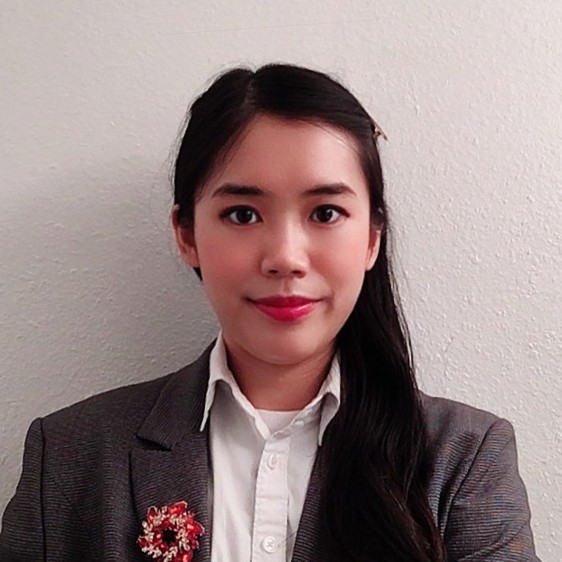
Amalie Shi
This is a page not in th emain menu
Published:
Insights from the Medical Technology UK conference covering sustainability in MedTech, human-centered design principles, and lessons from product development failures.
Published:
Summary of a BCS seminar on how automation should augment human judgment in testing rather than replace it entirely.
Published:
Reflections and key takeaways from attending the Medical Informatics Europe Conference, highlighting trends and innovations in health data and digital transformation.
Published:
Guide to extracting and validating test data from PDF reports using Python’s regular expressions, PyPDF2, and jsonschema.
Published:
Insights on integrating product and project management for better outcomes.
Published:
Learn how to use Python’s itertools to create powerful, flexible data-driven tests for automation and validation.
Published:
A practical guide to extracting structured test data from PDF reports using Python’s regex and validating it with JSON Schema.
Published:
Learn how to transform manual test specifications into a structured test data layer to enable scalable, automated testing workflows.
Published:
A personal reflection on the sunken cost fallacy and the emotional journey of leaving biomedical research.
Published:
A reflection on the power of gumption, inspired by leading ladies in film and literature, and its impact on personal and professional growth.
Published:
A personal story of transformation and health improvement through High-Intensity Interval Training (HIIT).
Published:
A data-driven exploration of breakfast cereals, uncovering nutritional trends and insights using Python.
Published:
An automated UI software testing framework for medical imaging applications, presented at RSLondon Southeast and awarded Best Poster.
For more information, click: here
Published:
A unique, readable, and maintainable test automation method for medical imaging UI software using Python.
For more information, click: here
Published:
Analyzed cellular responses to nutrient deprivation and autophagy induction mechanisms.
Published:
Developed computational models to study neuron firing patterns and hippocampal dynamics.
Published:
Research proposal and poster analyzing NF-κB pathway inhibition in glioblastoma cells.
Published:
Contributed as a writer to the Pioneer student journal
Published:
Designed pharmacokinetic/pharmacodynamic models to analyze drug synergy for malaria treatment.
Published:
Presented at the Society for Neuroscience (SfN) annual meeting.
Published:
Drafted a mock NIH R21 grant proposal for a computational motor control project, emphasizing signal feedback and neural modeling.
Published in Georgia Institute of Technology Research Thesis Library, 2017
Undergraduate Research Thesis, Georgia Institute of Technology
Published in SPIE, 2020
Assessment of computed tomography (CT) images can be complex due to a number of dependencies that affect system performance. In particular, it is well-known that noise in CT is object-dependent. Such object-dependence can be more pronounced and extend to resolution and image textures with the increasing adoption of model-based reconstruction and processing with machine learning methods. Moreover, such processing is often inherently nonlinear complicating assessments with simple measures of spatial resolution, etc. Similarly, recent advances in CT system design have attempted to improve fine resolution details - e.g., with newer detectors, smaller focal spots, etc. Recognizing these trends, there is a greater need for imaging assessment that are considering specific features of interest that can be placed within an anthropomorphic phantom for realistic emulation and evaluation. In this work, we devise a methodology for 3D-printing phantom inserts using procedural texture generation for evaluation of performance of high-resolution CT systems. Accurate representations of texture have previously been a hindrance to adoption of processing methods like model-based reconstruction, and texture serves as an important diagnostic feature (e.g. heterogeneity of lesions is a marker for malignancy). We consider the ability of different systems to reproduce various textures (as a function of the intrinsic feature sizes of the texture), comparing microCT, cone-beam CT, and diagnostic CT using normal- and high-resolution modes. We expect that this general methodology will provide a pathway for repeatable and robust assessments of different imaging systems and processing methods.
For more information, click: here
Published in Johns Hopkins University Research Thesis Library, 2020
Master’s Research Thesis, Johns Hopkins University
Published:
Functional electrical stimulation can activate weakened or paralyzed muscles during locomotion by using kinematic signals to control stimulation. Building on evidence that positive force feedback from Golgi tendon organs enhances load-bearing tasks, we engineered a feedback-controlled stimulation system to increase muscle force in cases of muscle weakness. In decerebrate cats, muscle force was recorded during stretch and used to trigger intramuscular electrical stimulation, amplifying force output beyond the stretch reflex. Adjustable thresholds and gains allowed us to explore system stability, revealing that stimulation remained stable across a wide parameter range, but excessive gain or low thresholds led to prolonged contractions. Clinically, electromyographic signals could provide feedback, with stimulation delivered via intramuscular or surface electrodes.
Published:
An automated UI software testing framework for medical imaging applications, presented at RSLondon
Published:
A unique, readable, and maintainable test automation method for medical imaging UI software
Undergraduate course, Georgia Institute of Technology, Department of Mathematics, 2013
Served as a Teaching Assistant for Calculus 1 and 2 from 2013 to 2016, leading recitation sessions to help students master derivatives, integration, and advanced calculus concepts. Provided guidance, answered questions, and facilitated problem-solving to enhance student understanding and performance.